Aviator crash game rules and cash out timing
Aviator is a crash-style betting game where the multiplier rises until it stops, and players cash out before that point to keep their stake multiplied at the chosen value. Waiting too long loses the whole round, so the practical decision is when to cash out instead of how long to watch the flight. The game result depends on the timing of that stop, not on any pattern from previous rounds.
How the Aviator Crash Game Mechanics Work
To understand how the Aviator crash game works, one must look past the simple visual of a plane taking off. The game is built on a deterministic interface driven by probabilistic outcomes. It is a multiplayer betting game where participants place wagers before a round begins. Once the round starts, a multiplier curve rises from 1.00x upwards. The core mechanic revolves around timing: players must cash out their bet before the plane ‘flies away,’ which signifies the crash point. If you cash out in time, your payout is your stake multiplied by the value displayed at the moment of withdrawal. If the plane flies away before clicking, you lose your entire stake for that round.
Download ripper casino | Android and iPhone browser access
The underlying technology relies on a Random Number Generator (RNG). In legitimate implementations, the RNG cycles through billions of possible outcomes per second. The specific multiplier at which the crash occurs is determined the moment the round begins, though this result is hidden from the player until the event happens. This ensures that the outcome is not influenced by previous rounds or external factors. However, because the game is hosted on offshore servers, verifying the integrity of this RNG is difficult for the average user. Unlike land-based pokies in Australian clubs, which are subject to strict state regulations and regular auditing, offshore crash games operate with minimal transparency regarding their source code.
Consider a hypothetical example to illustrate the payout calculation. Suppose you place a $10 bet on a new round. The plane takes off, and the multiplier climbs steadily: 1.5x, 2.0x, 2.5x. You decide to cash out at 2.5x. Your return would be $10 x 2.5 = $25, resulting in a net profit of $15. However, if the plane crashes at 1.8x, your attempt to cash out at 2.5x is invalid, and the $10 stake is forfeited. The tension in the game comes from the conflict between greed and risk management. Cashing out early guarantees small, frequent wins but yields low returns. Waiting for higher multipliers offers larger payouts but increases the probability of losing the stake entirely.
Many players mistakenly believe they can predict the crash point based on patterns. This is a fundamental misunderstanding of how RNGs function. Each round is an independent event; the fact that the last ten rounds crashed below 2.0x has zero influence on the next round’s outcome. The game does not have a memory. Strategies that involve increasing bets after losses (such as the Martingale system) are particularly dangerous in crash games because a single long streak of low multipliers can wipe out a bankroll rapidly. The mechanics are designed to reward quick decisions, but they penalise hesitation with total loss.
Another mechanical feature often found in these games is the ‘auto-cash out’ function. This allows players to set a predetermined multiplier threshold. If the game reaches that level, the system automatically withdraws the bet. While this removes emotional decision-making, it does not change the underlying odds. It merely automates the execution of a strategy that still faces the same house edge. Players should also note that some offshore platforms offer ‘provably fair’ systems, which allow users to verify the randomness of each round using cryptographic hashes. While this is a positive technical feature, it places the burden of verification on the player and does not address the broader issue of operator solvency or regulatory compliance.
The game catalogue incorporates leading international iGaming software developers, including Pragmatic Play, Evolution, BGaming, Betsoft, Spinomenal, and Wazdan, subject to regional licensing availability.
Operator comparison: games, accounts and verification
Australian players face a clear trade-off when selecting an online casino. Do you prioritise the sheer volume of automated titles or the tactile reality of live dealer streams? This distinction fundamentally shapes your gameplay rhythm and strategic depth.
| Brand | Details |
|---|---|
| Rioace | Rioace features thousands of games spanning real money online pokies, classic table games (blackjack, roulette, baccarat), progressive jackpots, crash games, and live dealer streams. |
| Spinrise | The game portfolio includes titles from renowned iGaming studios such as BGaming, Betsoft, Belatra, Booming Games, Wazdan, Platipus, Yggdrasil, and Pragmatic Play. |
| ipokies9 | Actual providers and lobby contents for iPokies9 are unverified; demo play availability is a useful way to test a lobby before depositing. |
| Grandpashabet | Slots from Pragmatic Play and NetEnt |
| Spinsage33 | Test live-dealer section stability. |
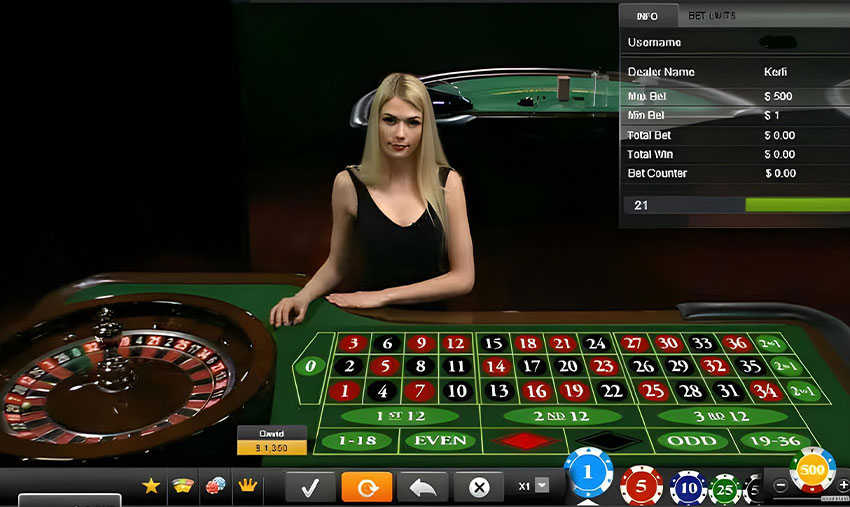
Operators with extensive RNG libraries deliver rapid spin cycles and diverse themes, suitable for short bursts of entertainment. Conversely, sites focused on live studios provide slower-paced, interactive sessions where human dealers manage physical cards and roulette wheels. Your choice should reflect whether you value algorithmic speed or authentic social engagement.
Rioace: Access to games
Rioace features thousands of games spanning real money online pokies, classic table games (blackjack, roulette, baccarat), progressive jackpots, crash games, and live dealer streams.
Spinrise: Access to games
Spinrise hosts thousands of titles covering video pokies, classic slots, progressive jackpot games, virtual table games, crash games, and live dealer streams.
ipokies9: Deposit and withdrawal terms
A pokies-branded casino of this type would typically stock online pokies (classic 3-reel, 5-reel video slots and jackpots) plus table games such as blackjack, roulette and baccarat, and often live dealer tables. Actual providers and lobby contents for iPokies9 are unverified; demo play availability is a useful way to test a lobby before depositing.
Slot Provider Integration at Grandpashabet
The slot library at Grandpashabet relies on established software studios including Pragmatic Play, NetEnt, and Hacksaw Gaming. These providers ensure consistent volatility profiles and certified random number generation across several thousand video slots. The integration of reputable developers means players encounter familiar bonus features and payout structures without needing to learn new game mechanics for each title.
Spinsage33 Table Game Access
The platform’s reliance on aggregated content from unknown providers necessitates direct verification of live-dealer and table game availability. Without confirmed supplier lists, players should assess the stability of these sections through real-time testing.
Understanding Variance, RTP, and the operator Edge in Crash Games
The Aviator crash game operates on a fundamentally different mathematical structure to traditional pokies or table games. Instead of spinning reels or dealing cards, the game utilises a continuous multiplier curve that ascends from 1.00x until it ‘crashes’ at a random point. This mechanism creates a high-pressure environment where players must manually cash out before the crash occurs to secure their winnings. Understanding how this curve functions, alongside the associated Return to Player (RTP) and volatility metrics, is essential for managing expectations and bankroll effectively.
Hotline Casino no deposit bonus | Eligible games
The Multiplier Curve and Crash Mechanism
At the start of each round, a virtual aircraft begins to take off, and a multiplier value starts increasing from 1.00x. The core mechanic is simple: place a bet, watch the multiplier rise, and click ‘Cash Out’ before the plane flies away. If you cash out in time, your stake is multiplied by the current value. If the plane crashes before players act, the bet is lost. The crash point is determined by a Random Number Generator (RNG), ensuring that every round is independent and unpredictable. Unlike pokies, where outcomes are fixed per spin, the Aviator player controls the duration of their exposure to risk through the timing of their cash-out decision.
This manual intervention introduces a psychological element absent in purely automated games. Players often face the temptation to wait for higher multipliers, chasing larger payouts, but this increases the probability of losing the entire stake when the crash occurs unexpectedly. The game typically allows multiple bets per round, enabling strategies such as splitting stakes between a low-risk early cash-out and a high-risk late cash-out. However, no strategy can alter the underlying odds; the house edge remains constant regardless of betting patterns.
Return to Player (RTP) Explained
The RTP for Aviator is generally advertised at 97%. This figure represents the theoretical percentage of wagered money that is paid back to players over an infinite number of rounds. For example, if $1,000,000 is wagered collectively across all players in a long-term period, approximately $970,000 would be returned as winnings, with the remaining $30,000 retained by the operator as the house edge. It is critical to understand that RTP is a statistical average calculated over millions of spins, not a guarantee for individual sessions. In the short term, players can experience significant deviations from this average, winning large sums or losing their entire bankroll quickly.
Compared to many Australian land-based pokies, which may have RTPs ranging from 85% to 95%, the 97% RTP of Aviator appears favourable. However, the speed of play in crash games is significantly faster than traditional slots. A single round of Aviator lasts only seconds, meaning losses can accumulate much more rapidly than in a slower-paced slot machine. The higher RTP does not compensate for the increased frequency of decisions and the potential for rapid bankroll depletion due to the game’s fast tempo.
Volatility and Variance in Crash Games
Aviator is classified as a high-volatility game. Volatility refers to the risk level associated with the size and frequency of payouts. High volatility means that wins are less frequent but tend to be larger when they occur, while losses can be substantial and consecutive. In the context of Aviator, this manifests as long periods where the plane crashes at low multipliers (e.g., 1.10x or 1.50x), resulting in small returns or quick losses if the player waits too long. Occasionally, the multiplier will reach high values (e.g., 10x or 50x), offering significant payouts for those who cash out at the right moment.
Variance describes the statistical dispersion of results around the mean. In high-variance games like Aviator, short-term outcomes can deviate wildly from the expected RTP. A player might win several rounds in a row, creating a false sense of control or luck, only to lose everything in a subsequent round when the crash occurs early. This unpredictability is inherent to the RNG-driven nature of the game. Unlike skill-based games such as poker, where long-term profitability can be achieved through superior decision-making, Aviator outcomes are entirely chance-based. No amount of pattern recognition or strategic betting can overcome the house edge over time.
Comparison with Traditional Pokies and Table Games
While both Aviator and traditional pokies use RNGs to determine outcomes, the user experience and risk profile differ significantly. Traditional pokies involve passive participation; once the spin is initiated, the outcome is fixed, and the player has no further control until the next spin. Aviator requires active decision-making during each round, adding a layer of psychological pressure and potential for impulsive behaviour. The ability to cash out early gives players a perceived sense of agency, but the crash point remains random and unaffected by player action.
Table games such as roulette or blackjack also offer varying levels of volatility and house edges. Roulette, for instance, has a fixed house edge (typically around 2.7% for European roulette) and predictable payout structures. Blackjack, when played with optimal strategy, can offer a house edge below 1%. Aviator’s 3% house edge (derived from its 97% RTP) is comparable to some table games, but the lack of strategic depth means players cannot reduce the house edge through skill. The fast pace and high volatility make Aviator more akin to high-stakes baccarat or certain side bets in roulette in terms of risk exposure, but without any opportunity for strategic mitigation.
Practical Implications for Players
Understanding these mechanics is crucial for responsible gambling. Players should set strict loss limits and session times before playing, as the fast pace and high volatility can lead to rapid bankroll erosion. The illusion of control offered by the manual cash-out feature can encourage risky behaviour, such as chasing losses or waiting too long for a big win. Recognising that each round is an independent event with no memory of previous outcomes helps maintain realistic expectations. The game is designed for entertainment, and treating it as a source of income is statistically unsound due to the inherent house edge and variance.
Can I predict when the Aviator plane will crash?
No. The crash point is determined by a certified Random Number Generator (RNG) for each round, making it impossible to predict future outcomes based on past results. Each round is independent, and no software or strategy can guarantee a win.
Katsubet 50 Free Spins | Game Contribution and Expiry Rules
Is the 97% RTP guaranteed for my session?
No. The 97% RTP is a long-term statistical average calculated over millions of rounds. In any single session, your results can vary significantly from this average, leading to either profits or losses that deviate widely from the theoretical expectation.
How does Aviator differ from traditional pokies?
Unlike traditional pokies, which have fixed outcomes per spin, Aviator requires active decision-making through manual cash-outs. Both games use RNGs, but Aviator’s high volatility and fast pace create a different risk profile, with less opportunity for strategic influence over outcomes compared to skill-based table games.
The absence of a public provider list for Spinsage33 prevents pre-session comparison of game mathematics. Most online casinos display Return to Player percentages in the footer or game info panel, but this practice is not guaranteed here. Consequently, assessing long-term expected value requires playing demo modes to observe hit rates and bonus trigger frequencies firsthand.
Frequently asked questions
Does the multiplier stop at a fixed point?
No. Each round starts at 1x and climbs until a random crash point ends it. You cannot predict when that happens, and previous rounds do not influence the next one.
What happens if my connection drops mid-round?
The round continues on the operator’s servers. If your bet was accepted before the disconnection, any payout is calculated from the crash point and settled to your balance once the connection is restored.
Can I play Aviator without depositing real money?
Yes, if the operator offers a demo mode, the round plays exactly like the real version except no funds are at stake and no winnings are payable. This lets you watch how the multiplier climbs and when the plane flies away before deciding whether to deposit.
Know When to Pause, Stop or Exclude Yourself
Deciding when to step away from Aviator requires monitoring behaviour, not just checking your balance. If you find yourself increasing stakes after a loss or playing longer than planned, the session has stopped being entertainment. Set strict time and deposit limits before logging in; these controls enforce boundaries that willpower often cannot. When those triggers are breached, stop immediately. Do not attempt to recover funds. For persistent issues, BetStop provides national self-exclusion across Australian sites, while Gambling Help Online (1800 858 858) offers confidential support for managing harm.